The Winter Power-Outage Kit: A Midwest Family Checklist
Ice storms and blizzards knock out power every winter. Here is a calm, practical kit and plan that keeps a family safe, warm and fed for a few days.
Heads up: As an Amazon Associate I earn from qualifying purchases. We never list prices because they change constantly; check the current price on Amazon. Disclosure
In this guide
Our top picks
- Room lightingEtekcity Lanterns 4-packCollapsible battery LED lanterns, safe in place of candles.Check on Amazon
- Hands-free lightLHKNL Headlamps 2-packRechargeable headlamps for chores in the dark.Check on Amazon
- Personal warmthOCOOPA MagTwinsRechargeable hand warmers that split into two.Check on Amazon
Paid links. As an Amazon Associate I earn from qualifying purchases.
At a glance: everything in this guide
| Pick | Best for | Why it made the list | Link |
|---|---|---|---|
| Etekcity Lanterns 4-pack Lanterns | Room lighting | Collapsible battery LED lanterns, safe in place of candles. | Check on Amazon |
| LHKNL Headlamps 2-pack Headlamps | Hands-free light | Rechargeable headlamps for chores in the dark. | Check on Amazon |
| OCOOPA MagTwins Hand warmers | Personal warmth | Rechargeable hand warmers that split into two. | Check on Amazon |
| Gas One GS-3400P Camp stove | Outdoor-only cooking | Dual-fuel stove for hot food outside; never indoors. | Check on Amazon |
| LifeStraw Personal Water filter | Backup water filter | Filters bacteria and parasites; no batteries. | Check on Amazon |
| Sawyer Mini Water filter | Compact backup filter | Tiny squeeze filter for bags and kits. | Check on Amazon |
If you live in the Midwest, you know the drill. An ice storm coats the power lines, a limb comes down somewhere down the road, and the house goes dark and quiet. Sometimes it's back in an hour. Sometimes it's three days.
Being ready for a winter outage isn't about bunkers and doom. It's about a plastic bin in the closet with the right things in it and a plan the whole family knows. Here's how to put one together.
The basics: what FEMA and the Red Cross recommend
Ready.gov and the American Red Cross both recommend having enough supplies for each person for several days, including:
- Water: one gallon per person per day, for at least three days
- Food: at least a three-day supply of non-perishable food
- Light: flashlights or lanterns and extra batteries (no candles if you can avoid them)
- Power: a battery bank for phones and a battery or hand-crank radio
- First aid kit and a week's supply of medications
- Warmth: blankets, sleeping bags and warm layers
Below is how we build on those basics, organized by need.
1. Light
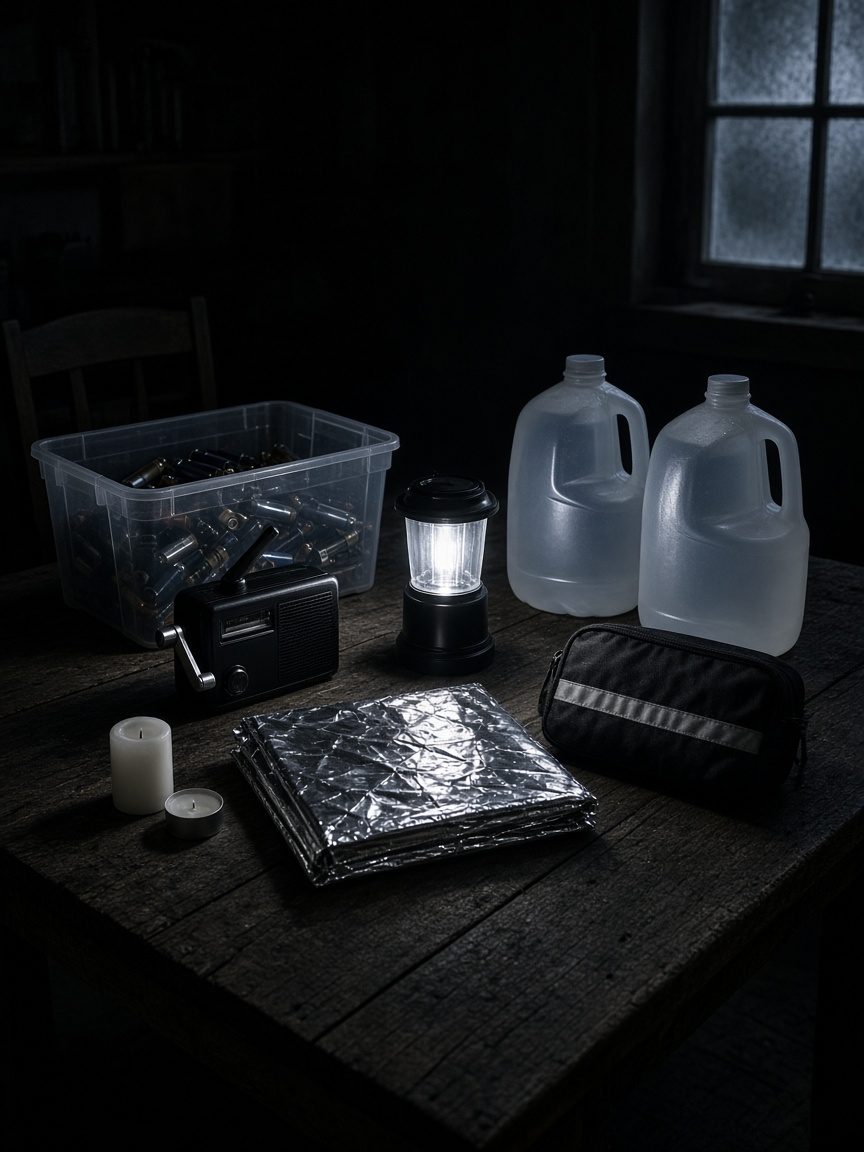
When the power goes out at 6 p.m. in January, light is the first thing you need. Candles are a fire hazard, especially with kids and pets, so we recommend battery-powered LED lanterns for rooms and headlamps for moving around.
Lanterns: Etekcity LED camping lanterns (4-pack)
These collapsible battery lanterns pull up to switch on and collapse down for storage. A four-pack covers the kitchen, living room, bathroom and a bedroom. Keep them in the kit with batteries stored separately (or check them every few months).
Etekcity LED Camping Lanterns (4-pack)
Best for: one lantern per main room, safer than candles.
Headlamps: LHKNL rechargeable headlamps (2-pack)
Headlamps keep your hands free for cooking, finding the breaker box or helping kids. Keep them charged; a rechargeable model only helps if the battery is full when the power goes out. Top them off when you change the clocks.
LHKNL Rechargeable Headlamps (2-pack)
Best for: hands-free tasks and the trip to check the breaker box.
2. Warmth
Without power, most furnaces don't run, even gas ones, because the blower and controls need electricity.
- Pick one room to gather in. Close doors to unused rooms and hang blankets over doorways.
- Layer up: wool socks, hats (you lose heat from your head), and sleeping bags.
- Keep everyone together for shared body heat. Kids and older adults are most at risk of getting too cold.
- Use rechargeable hand warmers for an extra boost, charged ahead of time.
OCOOPA UT2s MagTwins Rechargeable Hand Warmers
Best for: personal warmth during outages and cold nights. Charge them before storm season.
Watch for signs of hypothermia: shivering, confusion, slurred speech and drowsiness. If someone's showing them, get them warm and get help.
3. Water
If you're on a well, no power means no pump, which means no water. On city water, a big outage can affect water pressure and safety. Store at least one gallon per person per day.
Backup filters are a good addition for families who live near a creek, pond or lake, or who might be stuck in a car:
- LifeStraw Personal: drink directly from a water source through the filter.
- Sawyer Mini: a tiny squeeze filter that attaches to a pouch or bottle.
Both filter bacteria and parasites, not viruses or chemicals, and neither replaces stored water or a boil-water advisory. The Sawyer should be kept from freezing once it's been wet.
LifeStraw Personal Water Filter
Best for: a simple backup filter in every kit and car.
Sawyer Mini Water Filtration System (SP128)
Best for: compact filtering of larger amounts of water.
4. Food and cooking
Stock food that needs no cooking: peanut butter, crackers, granola bars, canned tuna, canned fruit, cereal. Keep a manual can opener in the kit.
For hot food, a camp stove is great, but only outside. The Gas One GS-3400P runs on butane or propane and can heat soup, coffee or water on a porch or in the yard, away from doors and windows.
Gas One GS-3400P Dual-Fuel Portable Stove
Best for: hot meals outside during a long outage. Outdoors only.
Fridge and freezer: keep doors closed. A full freezer holds its temperature for about 48 hours (24 if half full), and a fridge for about four hours, according to USDA guidance. When in doubt, throw it out.
5. Communication and power
- Battery bank for phones, charged
- Battery or hand-crank radio for weather updates
- Car charger as a backup (run the car only outdoors, never in a closed garage)
- A written list of important phone numbers in case your phone dies
6. The plan
Gear is only half of it. Talk through the plan with your family:
- Where are the kit, the breaker box and the water shut-off?
- Which room will you gather in?
- Who checks on elderly neighbors or relatives?
- At what point do you go to a warming center or a relative's house?
Where to keep the kit
A kit only helps if you can find it in the dark. Keep everything in one or two clearly labeled plastic bins in an easy-to-reach closet on the main floor, not buried in the basement or garage. Put a headlamp or flashlight on top so it's the first thing you grab. Keep a smaller version in each vehicle, with a blanket, water, snacks and a light, in case you get stuck on the road during a storm.
Pets and special needs
Remember everyone in the household. Store extra pet food and water, and keep a list of medications, medical devices that need power, and the contact details of doctors and pharmacies. If someone in your home relies on powered medical equipment, talk with their provider and your utility company ahead of storm season about a backup plan.
The kit checklist
- Water: one gallon per person per day for at least three days
- Non-perishable food and a manual can opener
- LED lanterns and headlamps, charged, with extra batteries
- Battery bank and radio
- Blankets, sleeping bags, hats and wool socks
- Rechargeable hand warmers, charged
- Outdoor-only camp stove and fuel
- Backup water filters
- First aid kit and medications
- Battery-powered CO alarms on every level
Check the kit twice a year when you change the clocks. Rotate food and water, recharge everything, and swap batteries.
Want a cozier everyday setup too? Our smart and cozy winter upgrades guide uses some of the same gear.
As an Amazon Associate I earn from qualifying purchases. Product details can change; confirm specs and what is included on the listing before you buy.
Keep reading
Christmas Gifts for Dad: Useful Picks for the Garage, the Couch and the Trail
Christmas gift ideas for dads who say they don't need anything: a multitool, a cordless drill, merino socks, a tracker for his keys, an e-reader and more.
The Winter Car Emergency Kit: What to Keep in Your Trunk Before the First Storm
A practical winter car emergency kit for snow and ice: a jump starter, tire inflator, snow brush, shovel, warmth and first aid, plus what to do if you get stuck.

Gifts for Homebodies: Practical Comforts They'll Use All Winter
Gift ideas for the people who would rather stay in: smart lighting, insulated drinkware, a spot cleaner and comfort-food cookware.